Plateful / Practical notes
Cooking with your Plateful pan: heat, oil & care
A practical starting routine based on Plateful’s own instructions, with realistic food-release expectations and a clear distinction between pan and lid limits.
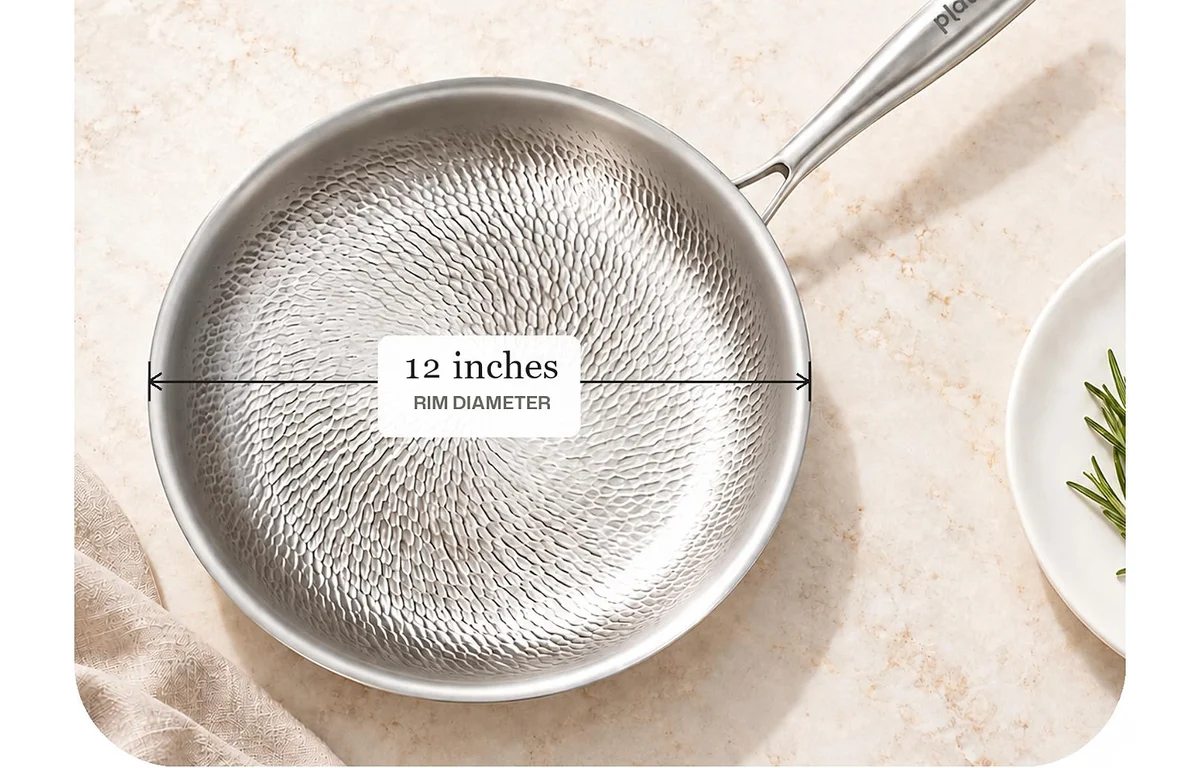
Read the instructions that arrive with the pan
This is the routine we would follow with this pan, built from Plateful’s own instructions. Plateful’s published instructions recommend medium-low heat for first use, a little oil, lower cooking heat and soaking with soapy water for cleaning. Follow the instructions supplied with your exact pan if they differ, and ask the seller to resolve an unclear instruction.
Start gently and use some fat
Plateful’s first-use directions say to warm the pan over medium-low heat, add a teaspoon of oil and spread it for two minutes. That is Plateful’s own instruction. Keep an eye on the pan and oil rather than assuming every hob’s “medium-low” setting produces the same temperature.
The brand’s food-release guidance includes a little oil or butter. That is why “uncoated” should not be read here as “requires no oil”, and why this guide does not promise that eggs will slide out regardless of temperature or technique.
Start your normal cooking conservatively and adjust as needed. A pan’s response depends on the hob, pan load, ingredient temperature and cooking fat. There is no universal dial position that suits every kitchen.
Do not chase an advertising number
The product page includes comparative heating and non-stick claims. We have not independently timed heating, compared this pan with a controlled alternative or tested repeated food release. Treat those claims as marketing, not a cooking instruction to run an empty pan at maximum heat.
Lower hob heat does not remove the need to cook food properly. Use appropriate food-safety guidance for the ingredients you are preparing; a pan’s material is not a substitute for checking the food itself.
Separate the pan from the lid
Plateful lists an oven limit of 750°F for the pan. The product page does not clearly establish that the pictured glass lid has the same limit. Other sections give conflicting descriptions of the included lid.
Do not assume the pan’s temperature rating covers the lid. Before putting a lid in the oven, confirm its material, knob construction and specific temperature limit with the seller or the documentation in the box. Until clarified, use only within the limits actually established for the part you are using.
Let cleaning follow cooking, not compete with it
The brand describes the pan as dishwasher-safe and recommends soaking in soapy water before washing. Allow hot cookware to cool before cleaning, and follow the supplied care instructions for the pan and lid separately.
For food residue, begin with soaking and an appropriate washing tool rather than assuming an aggressive abrasive or chemical cleaner is permitted. The product’s claimed durability is not a blanket instruction to use any cleaning method.
Check the seller’s utensil guidance too. A claim of scratch resistance does not mean scratches are impossible, and appearance in a marketing photo is not a test of long-term wear.
A sensible first-cook checklist
- Confirm the pan, handle and lid instructions before applying heat.
- Follow the brand’s medium-low first-use routine, observing the pan throughout.
- Use a little cooking fat; do not assume coating-free means oil-free.
- Adjust for your hob and ingredients instead of chasing a speed claim.
- Let the pan cool and follow the documented cleaning routine.
- If performance or care instructions remain unclear, contact the seller while keeping your order details.
Need to check the model first? See what the titanium-surface description means and the buying checklist.