Plateful / Practical notes
Is the Plateful pan solid titanium?
Understand what the brand’s construction statement says, how a titanium cooking surface differs from a whole pan and which claims still need evidence.
Start with the construction, not the headline
A pan can have a titanium cooking surface without being made entirely of titanium. This distinction matters when comparing cookware, judging weight or trying to understand why a pan works on induction.
On its Titanium Pro Pan listing, Plateful describes the construction as a stainless-steel base with a titanium cooking surface. Its FAQ makes the same distinction. Elsewhere on that page, broader marketing text describes the pan as entirely titanium. Those statements do not mean the same thing.
This guide uses the more specific surface-and-base description. Without a materials report from the seller, the listing is evidence of what Plateful says, not proof of alloy, thickness or titanium purity.
What the supplied photos show
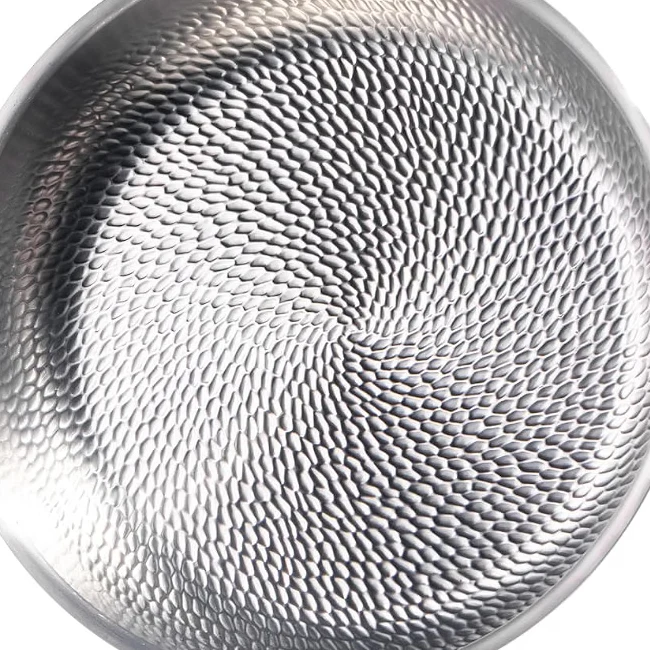
The supplied images show a silver-coloured pan with a visibly textured interior, a long handle and a lid pictured alongside it. A photograph can help identify the product’s appearance, but cannot establish a metal’s composition, a certification or how well food releases during cooking.
The texture is a visible design feature. The brand connects it with food release; this website has not measured that effect. We do not turn a close-up photograph into proof of a particular non-stick performance.
A surface claim is not a health study
Plateful markets the cooking surface as uncoated and makes additional claims about purity, chemical exposure and antibacterial properties. None of those claims arrives with a published test report for this exact pan.
The use of titanium in a medical device does not, on its own, establish a cookware-specific health benefit. Nor does a product description establish that every alternative cookware material is unsafe. This guide does not offer a medical endorsement or rank pans by a claimed effect on health.
If a certification matters to your decision, ask the seller for the report itself: the laboratory, sample identification, test method, date, results and the exact product or batch covered. A laboratory name in an advertisement is not enough to show what was tested.
For independent background, Consumer Reports’ 2022 investigation of cookware labels explains why a narrowly worded “free from” claim is not the same thing as complete test evidence. That investigation tested other cookware, not Plateful. It cannot verify this pan’s composition, safety or performance.
Induction is a separate question
The brand lists induction compatibility for the 12-inch pan. Confirm the exact model and your hob’s minimum pan-base requirements before buying. A top-rim diameter is not necessarily the same measurement as the part of the base that contacts the hob.
Do not infer induction compatibility simply from the word “titanium”. For this product, it is the published compatibility statement and the described base construction that are relevant buying information.
Questions worth asking
- What is the full layer construction, including any core between the base and cooking surface?
- Which part of the pan does a titanium-purity claim refer to?
- Is a test report available for this exact model, rather than a different product?
- What is the flat base diameter, rather than just the 12-inch rim diameter?
- Which instructions and temperature limits apply to the pan, handle and supplied lid separately?
For the practical implications, continue to cooking and care or the before-you-buy checklist. Brand-specific information here comes from the seller’s published listing, as recorded in the source notes; it remains subject to clarification and change.